Appendix · Additional Notes
HANGUL, The Cosmic Philosophy · p.297 / 428
9. 123 mystery of ㅇㅁㅅ


    The Korean language existed long before Hangul was
    created. Yet, the shapes of a circle, square, and triangle,
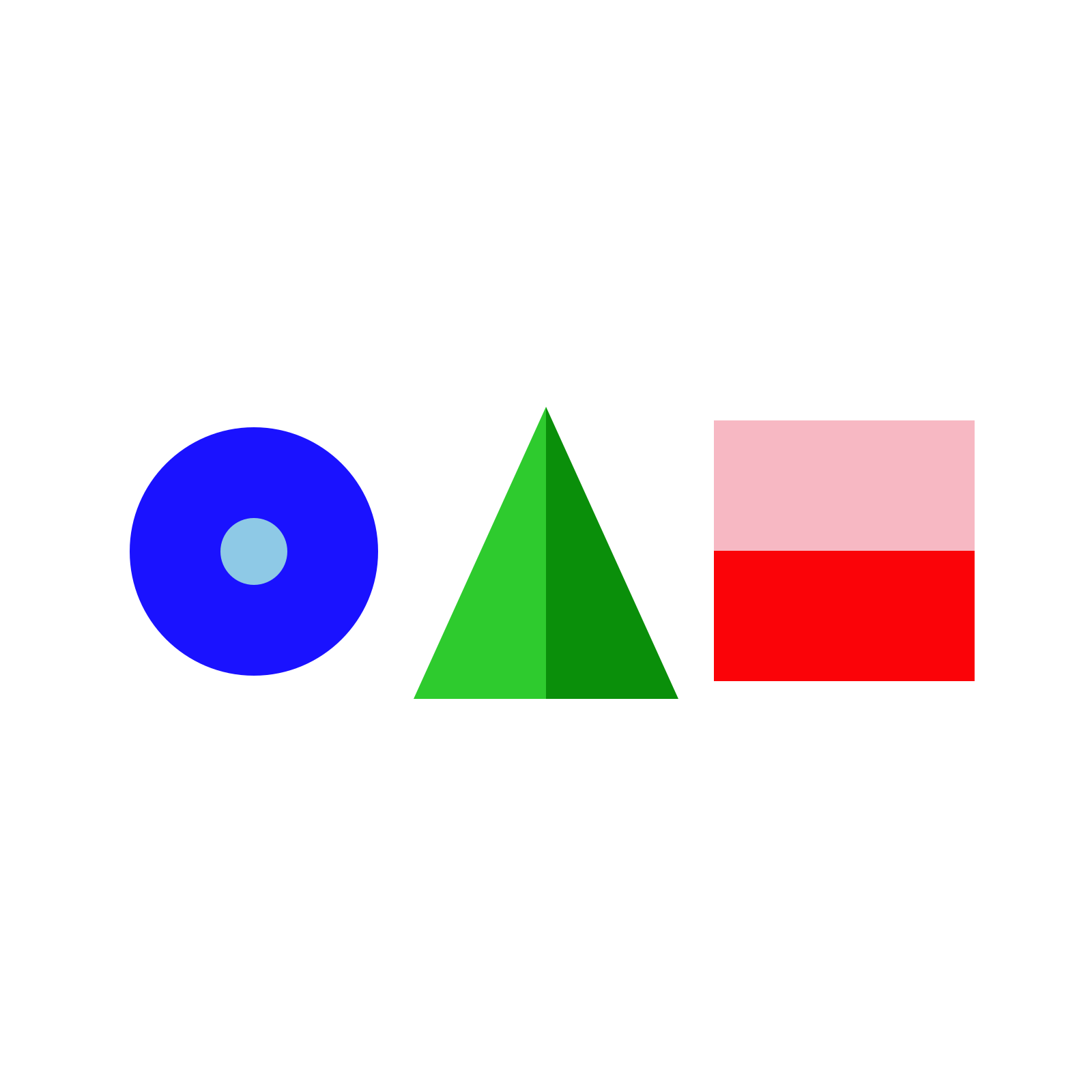
    symbolizing Heaven, Earth, and Human, are reflected in the
    initial consonants of the words for "one," "two," and "three"
    in Hangul: ㅇ ㅁ ㅅ.
    Astonishingly, this pattern extends beyond Korean. In major
    world languages, the initial consonant shapes for the
    numbers 1, 2, and 3 align with ㅇ ㅁ ㅅ when written in
    Hangul:
    Hana (하나), One (원), Ichi (이치) → ㅇ
    Dul (둘), Two (투), Ni (니) → ㅁ
    Set (셋), Three (쓰리), San (산) → ㅅ
    This mirrors the Samjae (Three Elements) principle of
    Heaven (ㅇ), Earth (ㅁ), and Human (ㅅ) and their symbolic
    shapes: the circle, square, and triangle. If we apply the
    concept of 0, then the sequence of ㅇ, ㅁ, and ㅅ would
    correspond to 0, 1, and 2, rather than the typical 1, 2, and 3,
    as suggested in this book.


    Appendix - Additional explanation                             297