Appendix · Additional Notes
HANGUL, The Cosmic Philosophy · p.311 / 428
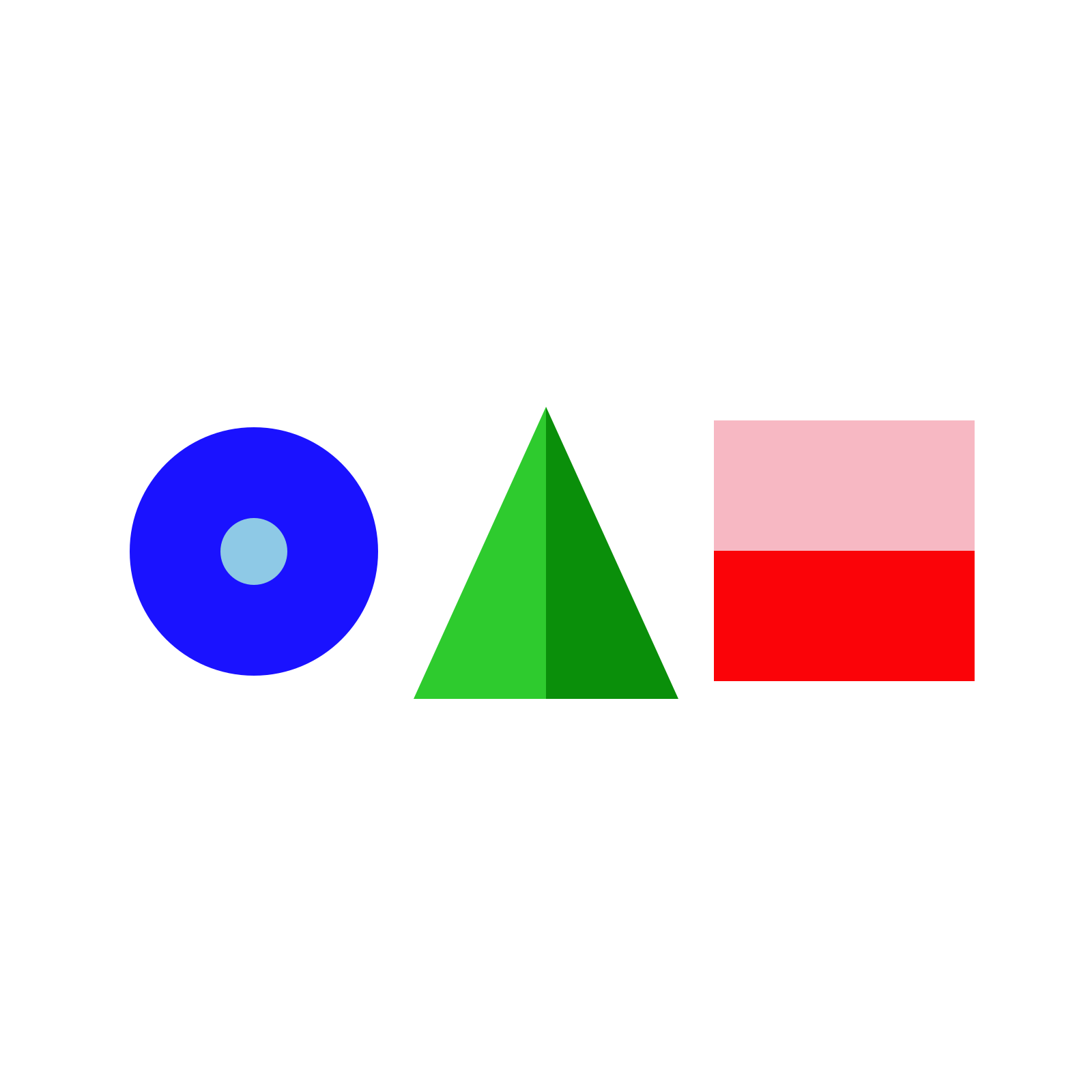
If approached through the geometric elements of ㅇㅅㅁ, ㆍ
    ㅣㅡ, and ㆍㅡㅇ (Hasattang, Wonsene, Jeomseonwon),
    Hangul could be learned intuitively by people worldwide.
    These simple patterns could make Hangul accessible and
    easy to understand for anyone.

    The need for restoration of Jeongeum characters
    Characters like ㆍ ㅿ ㆆ, as well as notation systems like
    Sunkyeongeum (rounded consonants: ㅸㅹㆄ) and double
    consonant representations such as      , must be restored
    according to the original Jeongeum principles. Even today,
    Hangul Jamo in Unicode allows for the composition of 1.6
    million Hangul syllables, and there are fonts available that
    support this. Establishing a standard would be the first step
    toward realizing this vision. It is also crucial to consider the
    adoption of three-set input methods (like the Dubeolsik and
    Sebulsik keyboard layouts) for efficient usage.

    The call for "Hanul-A" and a 25-character Hangul set
    The vowel ㆍ should be referred to as Hanul-A ([ʌ]) instead
    of Arae-a. As a first step, a restricted 25-character set has
    been proposed, which includes:
    Consonants: ㅇ ㅎ ㅅ ㅈ ㅊ ㅁ ㅂ ㅍ ㄴ ㄷ ㅌ ㄹ ㄱ ㅋ
    Vowels (Jeongeum order): ㆍ ㅡ ㅣ ㅗ ㅏ ㅜ ㅓ ㅛ ㅑ ㅠ ㅕ


    Appendix - Additional explanation                              311


                              ᄯᅡ